
Prague Public Transport Tickets Explained: What to Buy, How to Validate & PID Lítačka
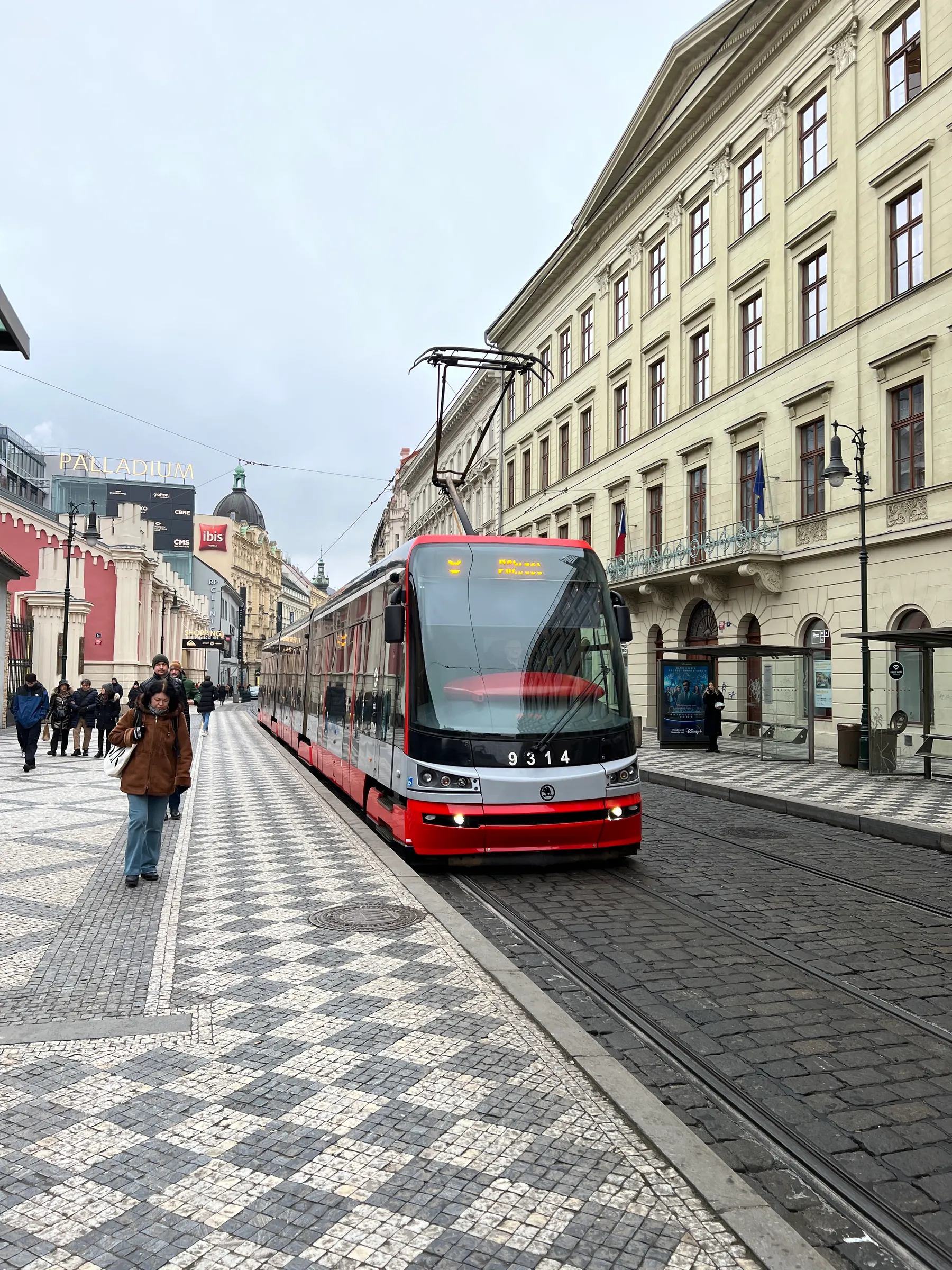
Prague has one of the easiest public transport systems I’ve used in Europe.
The metro, trams and buses are well connected, they run frequently, and one ticket can be used across different types of transport. You don’t need a separate tram ticket, another one for the metro and another one for the bus.
The only part that may confuse a first-time visitor is the ticket itself.
Should you buy 30 minutes, 90 minutes, 24 hours or 72 hours? Do you validate a day ticket? What happens if you buy it inside a tram? And is PID Lítačka actually worth installing?
I spent several days in Prague relying almost entirely on public transport, using both physical tickets and the PID Lítačka app. Once you understand the ticket rules, the whole system becomes almost effortless.
Prague Public Transport Ticket Prices in 2026
Prague uses time-based tickets, not tickets tied to one specific ride. During the validity period, you can transfer between metro, tram, bus and other regular PID services without buying another ticket.
Current adult fares are:
30 minutes: 36 CZK Lítačka app, 39 CZK Paper ticket
90 minutes: 46 CZK Lítačka app, 50 CZK Paper ticket
24 hours: 140 CZK Lítačka app, 150 CZK Paper ticket
72 hours: 340 CZK Lítačka app, 350 CZK Paper ticket
These prices have been in effect since January 1, 2026, and buying through the PID Lítačka app is now slightly cheaper than buying the equivalent paper ticket.
Which Ticket Should You Buy?
For a tourist, I wouldn’t overcomplicate this.
If you are making only one or two short trips, the 30- or 90-minute ticket makes sense.
If you are actually sightseeing and moving around Prague throughout the day, I would seriously consider the 24-hour ticket. That’s what I usually did. It removes the need to constantly calculate whether you have enough time left or whether you need another ticket.
And if you are staying for roughly three days and expect to use public transport regularly, the 72-hour ticket is the obvious choice.
At current app prices, three separate 24-hour tickets would cost 420 CZK, while one 72-hour ticket costs 340 CZK. For a two-day trip, however, two 24-hour tickets cost only 280 CZK, so buying 72 hours automatically is not always cheaper.
This is exactly the kind of thing I would plan better on another Prague trip. We often bought day tickets because they were convenient, but for a full three-day stay I would now simply buy the 72-hour option in the app and forget about tickets for the rest of the trip.
One Ticket Works Across Metro, Tram and Bus
This was one of the things I liked most about Prague.
You can take a tram, transfer to the metro and then finish the journey by bus without buying three different tickets. As long as your ticket is still within its validity period, you simply continue travelling.
The 24- and 72-hour Prague tickets allow unlimited journeys during their validity and cover normal PID metro, trams, buses, trolleybuses, ferries and PID trains within Prague. Airport Express and certain special historic routes use different fares.
That unified system is a big reason I think renting a car in Prague makes very little sense for most visitors. I wrote separately about why Prague’s public transport made renting a car pointless.
The Important Part: How to Validate a Paper Ticket
This is where it’s easy to make a mistake.
If you buy a normal paper ticket from a traditional ticket machine or ticket office, you validate it once, at the beginning of your first journey.
For the metro, validate it before entering the paid platform area.
For buses and trams, validate it immediately after boarding.
And yes — 24-hour and 72-hour paper tickets also need to be validated once. Their validity starts from the time stamped onto the ticket.
Do not validate the same ticket again when changing from tram to metro or from one bus to another.
In fact, PID explicitly warns that repeatedly validating a 24- or 72-hour ticket can invalidate it.
So the rule is simple:
Paper ticket → validate once → leave it alone until it expires.
But Not Every Physical Ticket Needs Validation
Here comes the slightly confusing exception.
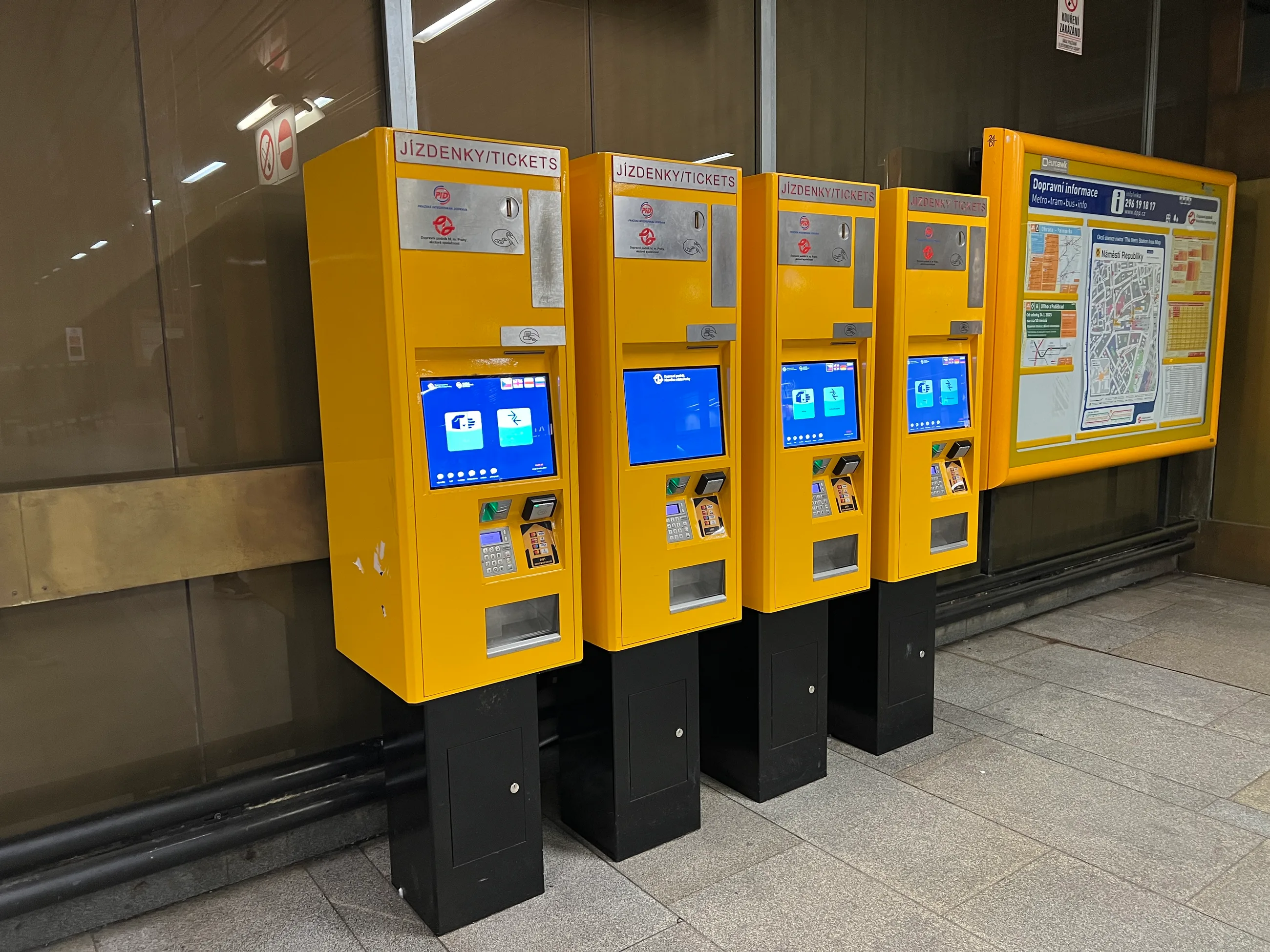
Prague also has contactless touchscreen ticket terminals inside trams and city buses and at metro stations. If you buy a ticket from one of these terminals, the date and validity are already printed on it and the ticket becomes valid immediately.
You do not validate that ticket again.
So don’t assume that every piece of paper must go into a validator.
Look at how you bought it.
A traditional advance paper ticket needs validation on first use. A ticket issued by a contactless onboard terminal is already active.
This sounds more complicated written down than it actually feels in Prague.
PID Lítačka Is Even Easier
I also used PID Lítačka, Prague’s official transport app.
For me, it was worth having.
You can search connections, buy tickets directly on your phone and keep unused tickets ready for later activation. Payment can be made electronically, including by card and supported mobile-payment options.
The main thing to understand is that buying a ticket in the app and activating it are not necessarily the same thing.
You can buy a ticket in advance and activate it only when you are ready to travel. Once activated, that action cannot be reversed.
Do not wait until you see a ticket inspector before activating it.
PID currently instructs passengers to have the mobile ticket active before travelling and states a minimum activation protection period before it becomes valid. Its current travel guidance specifies at least 60 seconds, while the Lítačka FAQ still describes a longer protective window in some cases. To avoid any ambiguity, I would simply activate mine about two minutes before boarding.
That costs you nothing and removes the risk of standing inside a tram with a ticket that technically isn’t valid yet.
Do You Even Need PID Lítačka?
Strictly speaking, no.
Prague is perfectly usable without it.
During my trip, Google Maps was incredibly accurate for finding routes and checking which tram, metro or bus to take. I never felt that I needed a complicated collection of local apps just to move around.
But I would still install PID Lítačka before my next visit for one specific reason:
tickets.
In 2026, tickets purchased through the app are cheaper than their paper equivalents, and being able to buy a 24- or 72-hour ticket before you even start travelling is simply convenient.
My setup would be very simple:
Google Maps for navigation + PID Lítačka for tickets.
Nothing more.

Buying Tickets With a Card Is Easy
I travelled through Prague with very little cash and paid for almost everything by card, including transport-related purchases.
That remains easy today. Modern touchscreen ticket machines accept contactless cards, and contactless ticket terminals are available in city buses, trams and metro stations.
One small distinction is worth knowing: some older button-operated ticket machines still accept coins only, while modern touchscreen machines support card payment.
So if one machine looks prehistoric and refuses your card, don’t conclude that Prague suddenly became cash-only. Find a touchscreen machine, buy on board where available, or use PID Lítačka.
My Recommendation After Using Prague Public Transport
When I first visited Prague, I bought tickets around the city and also experimented with PID Lítačka. The system was already easy to understand once I started using it.
If I returned today, I would make it even simpler.
For an active three-day city break, I would install PID Lítačka before arrival, buy the 72-hour ticket in the app, activate it before my first journey and then stop thinking about transport tickets entirely.
For a one-day visit, I’d probably do the same with a 24-hour ticket.
And if I only needed one or two journeys, I’d buy a 30- or 90-minute ticket instead.
The biggest mistake is not choosing the “wrong” ticket by a few Czech crowns. It’s forgetting that a traditional paper ticket must be validated — or activating an app ticket only after you’ve already boarded.
Once you understand those two rules, Prague’s public transport becomes exactly what it felt like during my trip: fast, clean, predictable and ridiculously easy to use.
Rate this guide
No ratings yet
Be the first to rate this guide.
Tap to rate
Questions & Comments
Travel Smarter, Not Harder
Get practical travel tips, hidden gems, and real experience-based guides straight to your inbox.
By subscribing, you agree that I may use your email to send newsletter updates, new guide alerts, and occasional travel emails. You can unsubscribe anytime using the link in any email. Read the Privacy Policy and Cookie Policy.
Read Next
National Technical Museum Prague: Is It Worth Visiting?
Is Prague’s National Technical Museum worth it? Here’s what to see, how much time you need, current ticket prices and practical tips before visiting.

Is Prague Safe? My Experience Walking the City Day and Night
Is Prague safe day and night? My experience plus the real risks tourists should know about: pickpockets, scams, taxis, nightlife and what to avoid.

Mistakes I Made in Prague — And What I’d Do Differently Next Time
The Prague mistakes that cost me money, time and sore feet — from airport taxis and transport tickets to winter closures and walking too much.