
Driving the Transfagarasan: Honest Tips, Common Mistakes & What to Expect (2026)
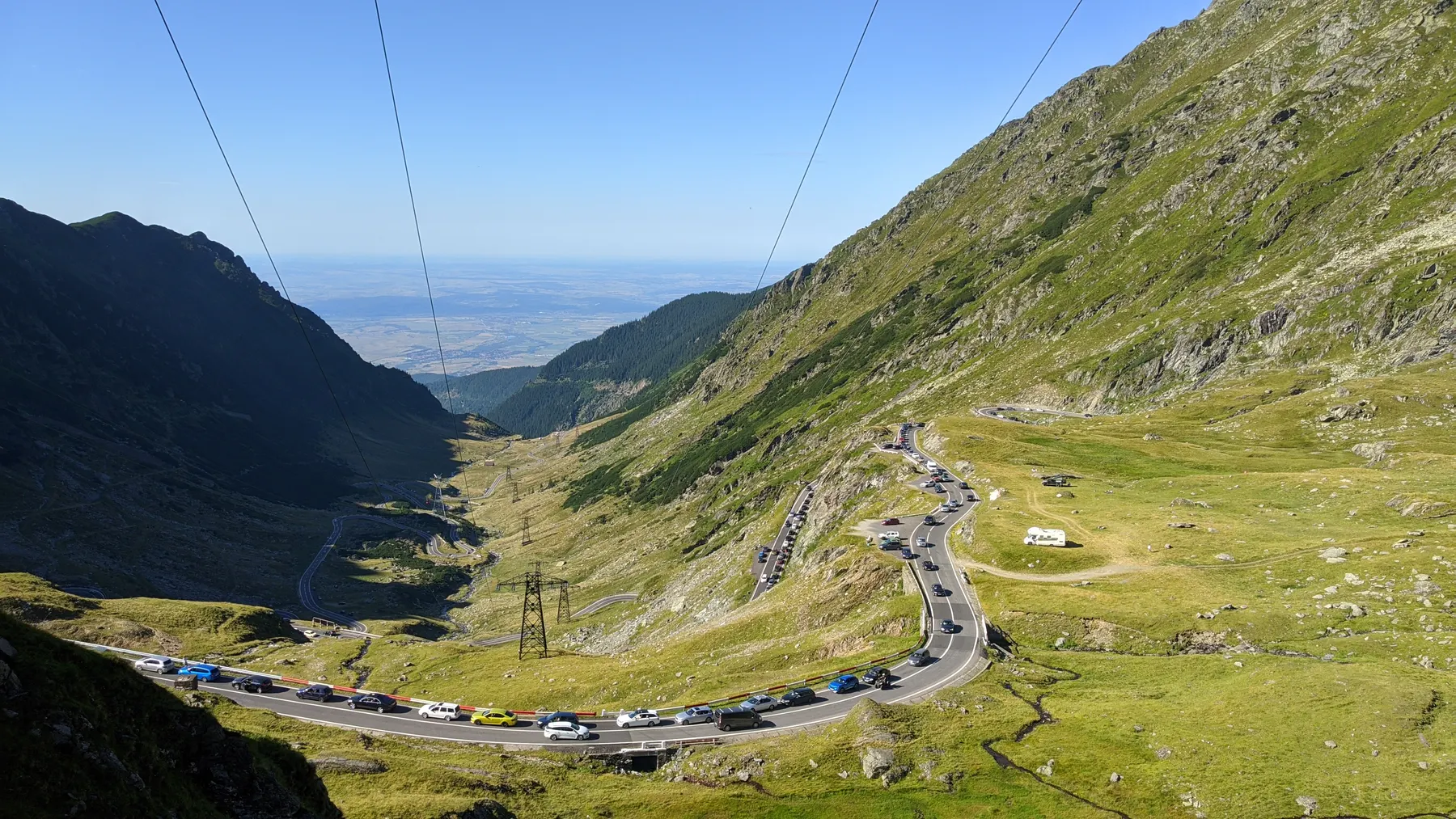
Driving the Transfagarasan had been on my bucket list for years. Like many people, I had only seen the famous drone shots and endless photos of its winding curves crossing the Făgăraș Mountains. Since then, I've driven this road several times, from both directions, in different seasons, and every trip taught me something new.
If you're planning to drive the Transfăgărășan, don't just focus on the views. The road is spectacular, but your experience will depend much more on when you go, how prepared you are, and what mistakes you avoid.
Is the Transfagarasan Worth Driving?
Absolutely.
In my opinion, the Transfagarasan is one of the most beautiful roads in Europe and easily one of the highlights of any trip through Romania. The combination of mountain scenery, endless hairpin turns, alpine lakes and dramatic landscapes makes the drive unforgettable.
But here's the catch: depending on when you visit, it can either become one of the best road trips of your life or several frustrating hours spent sitting in traffic.
If you're trying to decide between Romania's two most famous mountain roads, you may also enjoy reading my comparison after driving the Transalpina multiple times.
How to Plan Your Transfagarasan Drive
The Transfagarasan (DN7C) connects the southern side of the Fagaras Mountains near Curtea de Arges with the northern approach through Cartisoara, towards Sibiu.
I've driven it in both directions, and I wouldn't say there's one universally better route. It depends on where you're coming from and where you're heading next.
North to South or South to North?
North to south: If you're starting near Sibiu, you'll approach the famous hairpin bends from Cartisoara and climb towards Balea Lake. After crossing the mountain, the road continues through the forests towards Vidraru Dam and Curtea de Arges.
South to north: If you're arriving from Bucharest or Curtea de Arges, you'll pass Vidraru before climbing into the alpine section. The spectacular northern hairpins come after the tunnel as you descend towards Cartisoara.
Both directions are worth driving. I would choose whichever fits your wider Romania itinerary rather than adding unnecessary kilometres just to start from a particular side.
How Much Time Should You Allow?
I wouldn't plan the Transfagarasan as a quick drive.
Even when traffic is light, you'll probably want to stop several times for viewpoints, photos and Balea Lake. On busy summer weekends, congestion can add hours to the journey. On one of my visits, we spent around four to five hours just getting through the traffic near the summit.
For a relaxed trip, I'd reserve most of the day rather than committing to a tight schedule.
Can You Drive the Full Route All Year?
No. The high-altitude crossing is normally closed during the colder months, and temporary restrictions can also apply because of bad weather.
Lower sections may remain accessible, but being able to reach Vidraru or Balea Cascada doesn't necessarily mean you can cross the mountains.
Always check the current road restrictions before setting off, especially in spring and autumn.
When Is the Best Time to Visit?
The Transfagarasan closes every year during the cold season because of snow. There isn't a fixed opening or closing date, as everything depends on weather conditions, so always check the latest official announcements before planning your trip.
I've driven it during summer, autumn and just a couple of days after the seasonal reopening.
If you want my honest opinion:
Early summer (right after reopening) is probably the most impressive. You'll still find large walls of snow near Balea Lake while the valleys below already feel like summer.
Autumn offers beautiful colors and noticeably less traffic.
Summer weekdays are still a great option.
Summer weekends? I'd avoid them whenever possible.
If you want to avoid the crowds without changing your travel dates, the time of day can make a huge difference too. I had a completely different experience driving the Transfagarasan in the evening, with quieter roads, empty viewpoints, and much softer light.
Road status update (October 2026): On October 27, Romanian road authorities temporarily closed the high-altitude section of the Transfagarasan between Piscul Negru and Balea Cascada because of snow, fog and low temperatures. Whether it reopens depends on weather and safety conditions.
If you're planning a trip, check the latest official CNAIR road announcements before relying on the full mountain crossing being accessible.
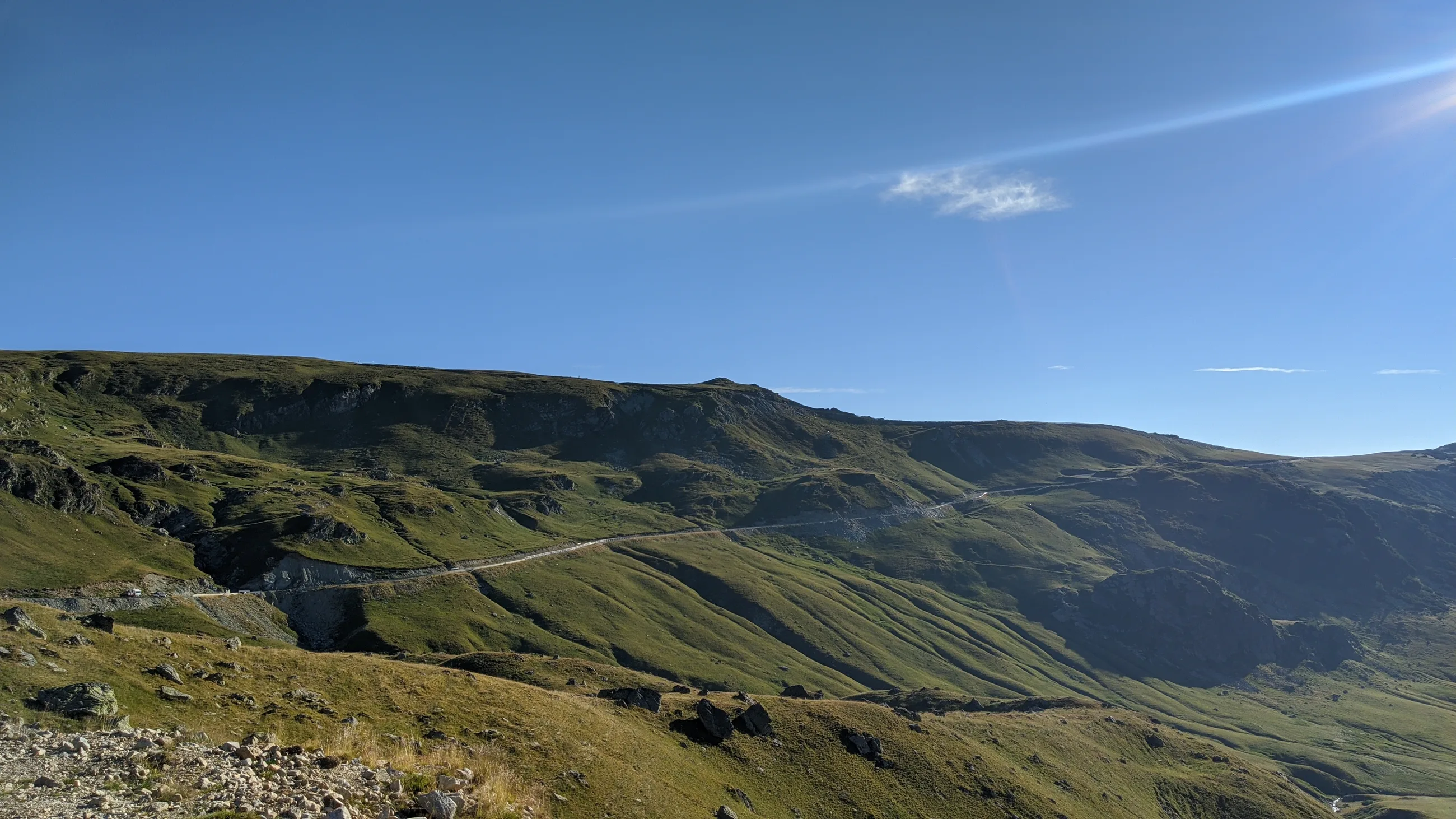
Don't Make the Same Mistake I Did
The first time I drove the Transfagarasan, it was a hot summer weekend.
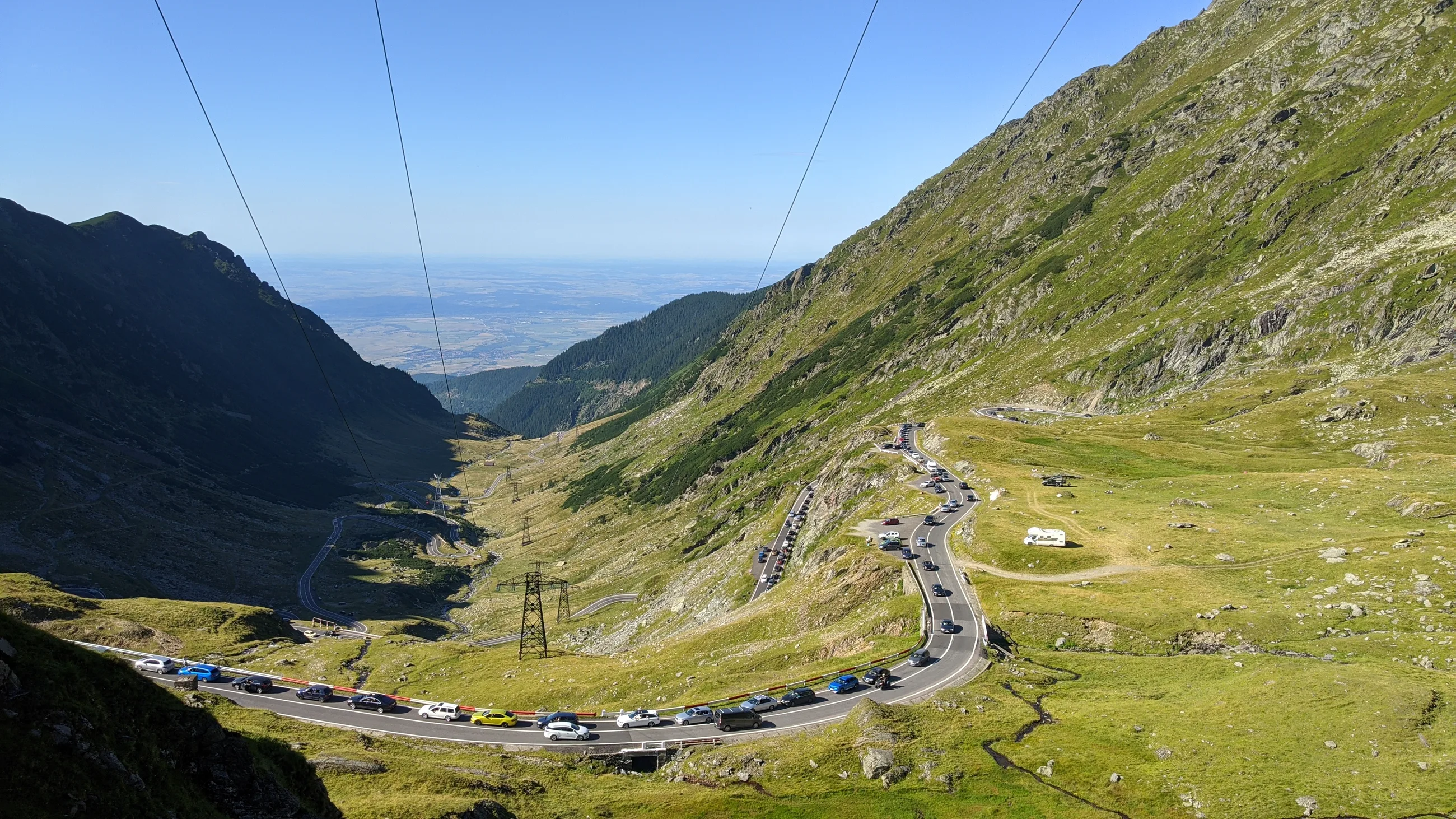
As we climbed higher from the northern side, the traffic became heavier and heavier until everything came to a complete stop near Balea Lake.
Thousands of visitors, hundreds of parked cars, souvenir stalls, restaurants and tourists all trying to enjoy the same place created massive traffic jams in both directions.
We spent around 4–5 hours crawling uphill.
If you're unlucky enough to arrive during peak hours, you'll spend more time looking at the rear bumper of the car in front of you than at the mountains.
If your schedule allows it, simply choose a weekday. The experience is completely different.
Prepare Your Car Before You Go
Many people underestimate this road.
The Transfagarasan isn't difficult to drive, but it puts much more stress on your car than a normal highway.
Before you leave, make sure your car is in good mechanical condition.
Pay special attention to:
brakes
clutch
steering
cooling system
air conditioning
tire condition
This becomes even more important if you end up stuck in traffic on steep uphill sections.
Also, fill up your fuel tank before entering the mountain road. There are no convenient fuel stations once you're on the Transfagarasan.
Mountain Weather Can Surprise You
One thing that surprises almost everyone is the temperature difference.
It can easily be 30°C at the foot of the mountain while feeling close to 0°C around Balea Lake.
If you visit shortly after the road reopens, you'll most likely still find snow at the top.
Always bring an extra layer with you.
A hoodie or a lightweight windproof jacket takes almost no space in the car but can make a huge difference once you reach the summit.
Balea Lake Tips
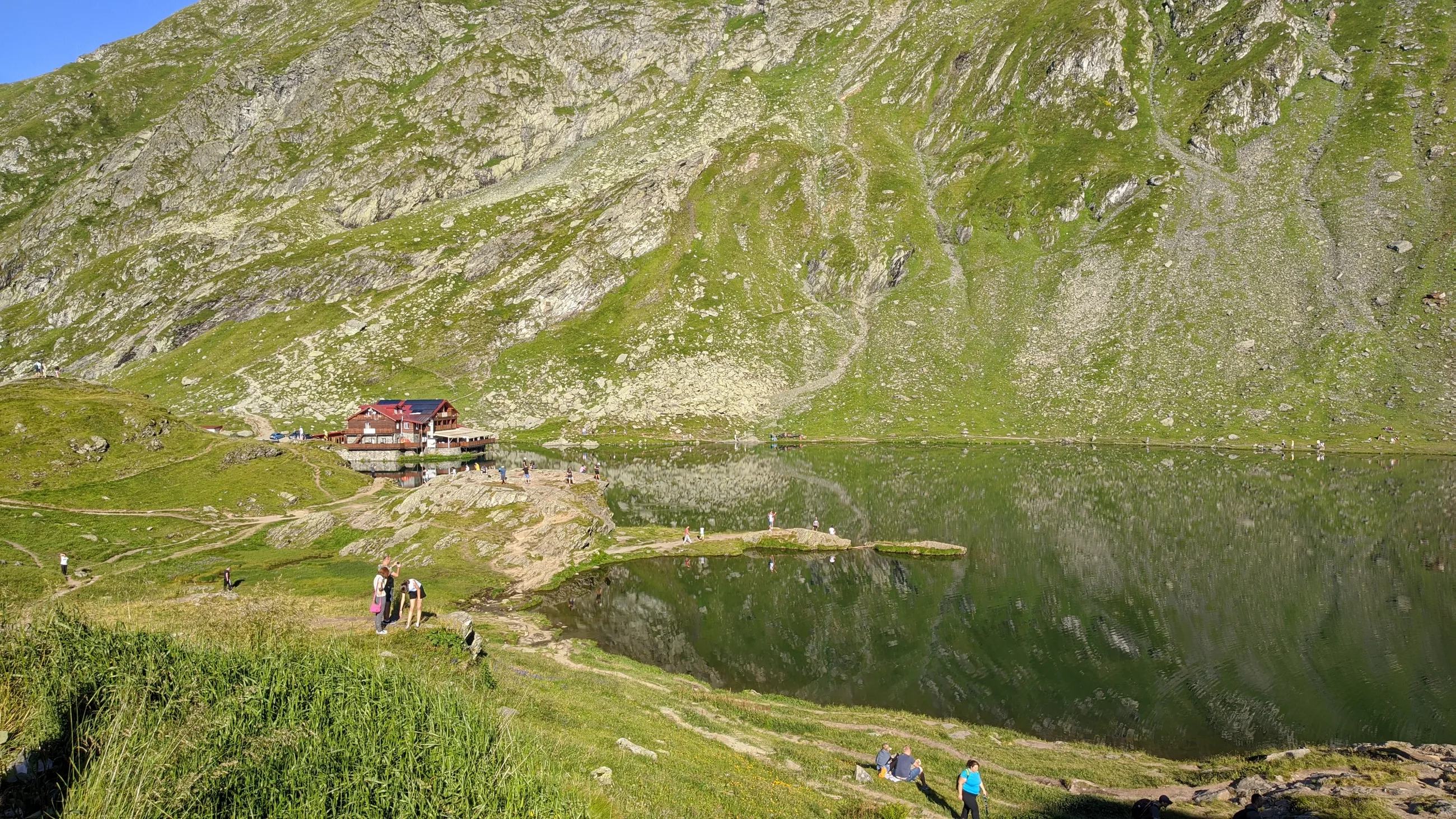
Balea Lake is the busiest point along the Transfgarasan and definitely worth stopping for.
You'll find:
beautiful mountain views
restaurants
local food
souvenir shops
plenty of places for photos
Parking around Balea Lake can become extremely difficult on summer weekends. If the main parking area is full, don't stop on narrow bends or block the road while waiting for a space.
There may be additional parking areas on either side of the Balea Tunnel, but check where parking is permitted and how you can reach your destination safely on foot. I wouldn't recommend walking through the road tunnel without a clearly designated and permitted pedestrian route.
You'll also find a cable car here, but if you're already exploring the Transfagarasan by car, I personally don't think it's worth paying for it.
Drive Carefully
This may sound obvious, but it's worth repeating.
The scenery is so spectacular that it's easy to become distracted.
Sharp bends, changing weather, cyclists, motorcycles, pedestrians, and occasional rockfalls all require your attention.
If you want to stop for photos, only do so in designated parking areas or places where you won't block traffic or create dangerous situations.
Bears Are Part of the Experience
As you descend toward the southern side, especially around the forests near Vidraru, bear sightings are relatively common.
If you see one:
slow down
stay inside your vehicle
never feed it
don't try to get closer for photos
Besides being dangerous, feeding bears creates long-term problems for both animals and visitors.
Respect that you're driving through their habitat.
Don't Skip Vidraru Dam
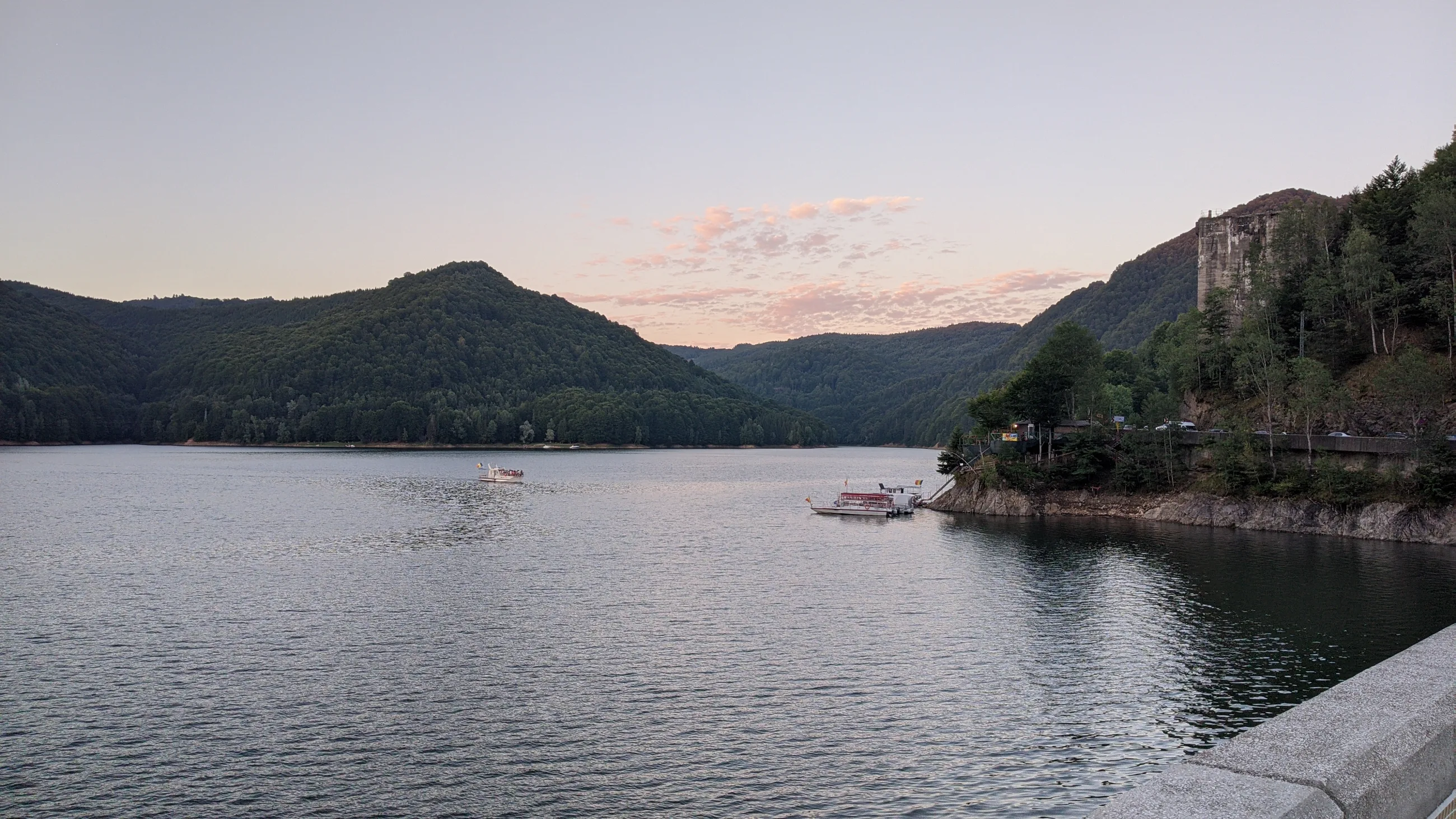
Once you continue toward Curtea de Argeș, you'll eventually reach Vidraru Dam.
Standing 166.6 meters (547 ft) high, it's one of Romania's tallest dams and one of the country's most impressive engineering projects.
The views over Lake Vidraru are spectacular, and it's well worth stopping for a few minutes before continuing your journey.
Final Thoughts
If you're visiting Romania and enjoy road trips, the Transfagarasan deserves a place on your itinerary.
Just don't make the mistake of treating it like a road you simply drive through.
Plan your visit, avoid busy weekends, prepare your car properly, and allow enough time for spontaneous stops along the way.
Trust me — the best memories won't come from reaching the other side of the mountains.
They'll come from everything you experience in between.
Rate this guide
No ratings yet
Be the first to rate this guide.
Tap to rate
Questions & Comments
Travel Smarter, Not Harder
Get practical travel tips, hidden gems, and real experience-based guides straight to your inbox.
By subscribing, you agree that I may use your email to send newsletter updates, new guide alerts, and occasional travel emails. You can unsubscribe anytime using the link in any email. Read the Privacy Policy and Cookie Policy.
Read Next
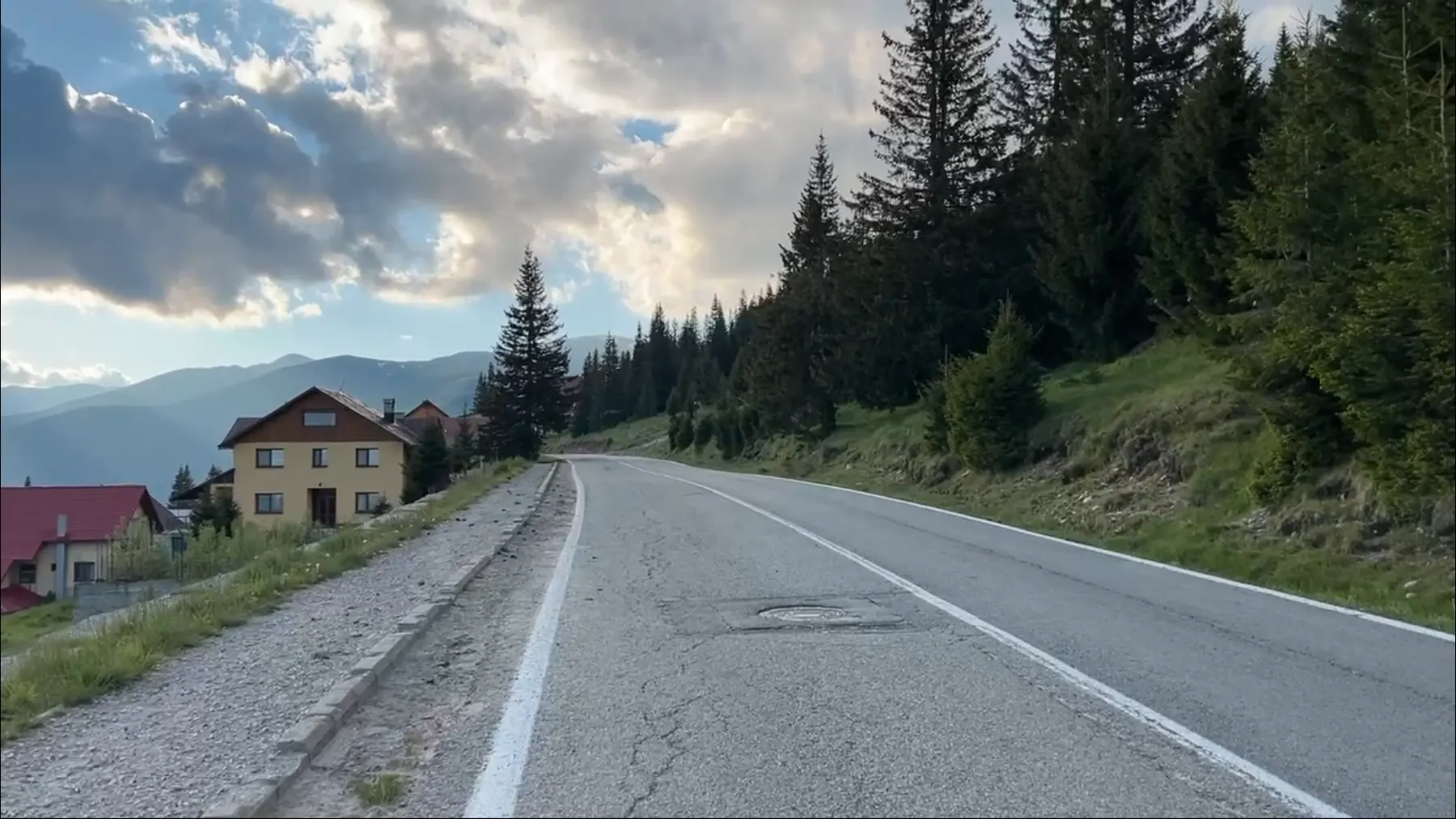
Where to Stay in Ranca on the Transalpina: My Hotel Experience
Wondering where to stay on the Transalpina? After driving Romania's highest mountain road several times, I found Rânca to be the most practical base. Here's why I chose it, what to expect, and whether it's the right place for your trip.
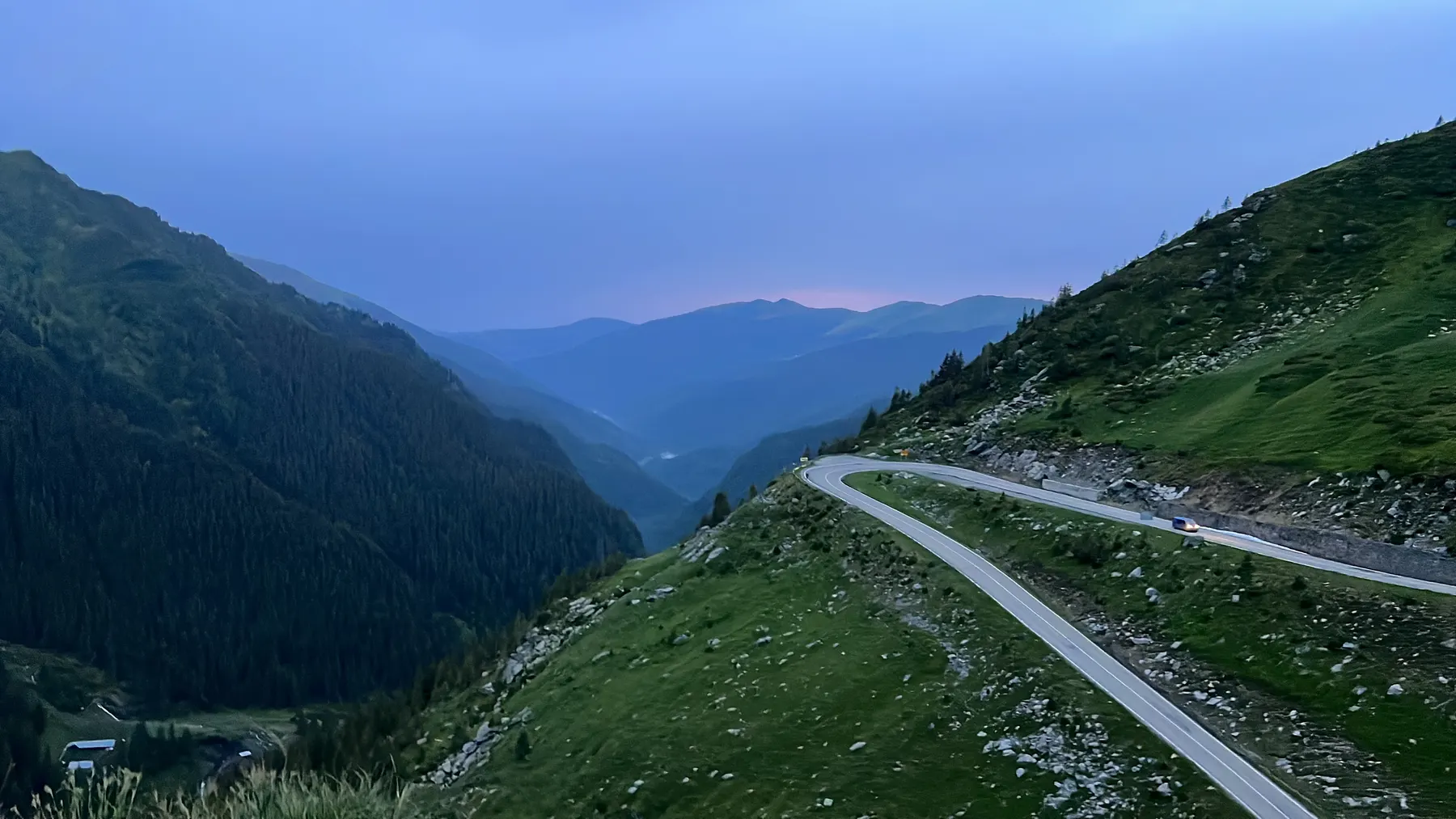
Is Driving the Transfagarasan in the Evening Worth It? My Honest Experience
Thinking about driving the Transfagarasan in the evening? Here's what the experience is really like, including traffic, scenery, safety, and whether sunset is the best time to visit.
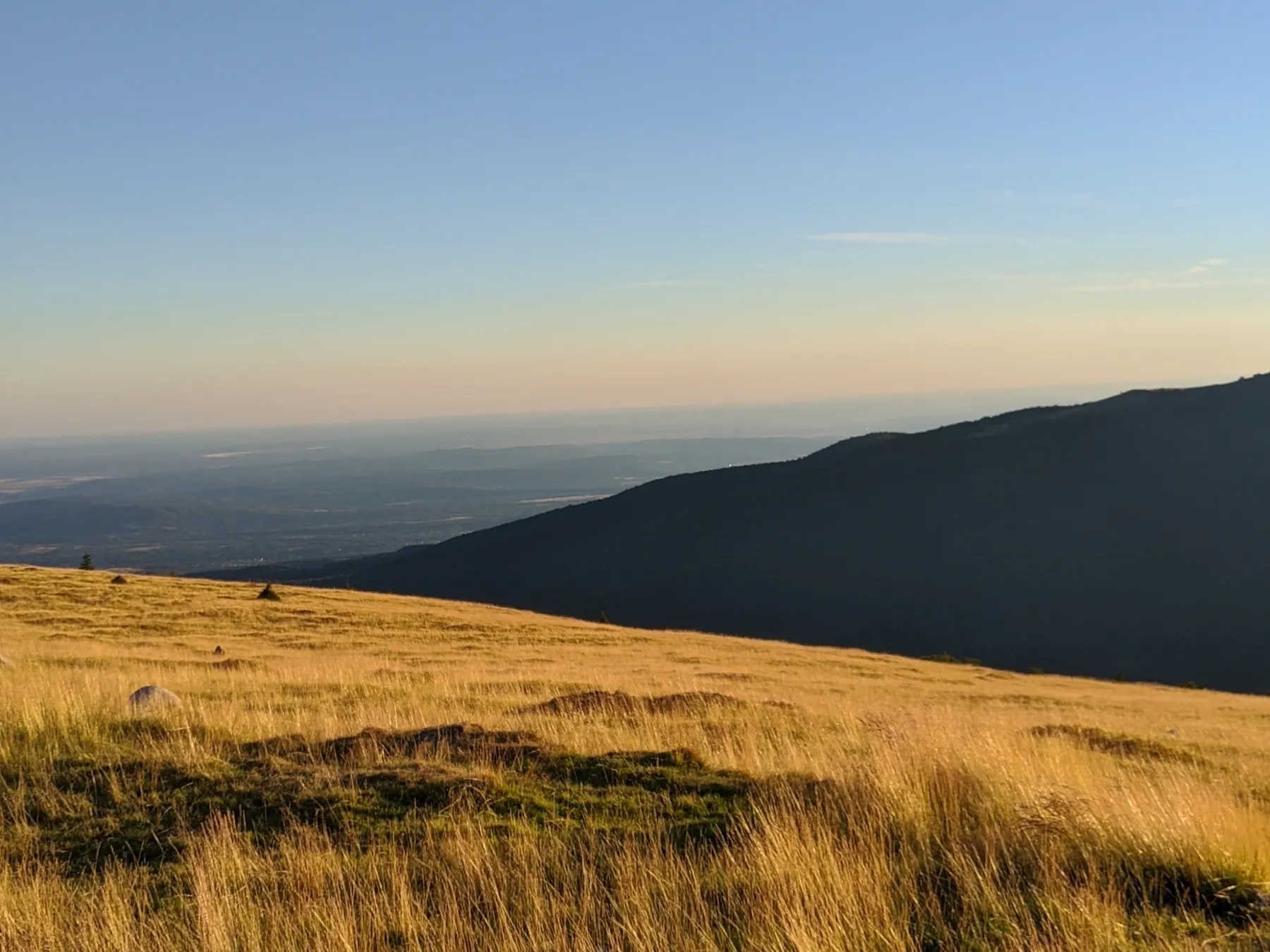
Driving the Transalpina: Everything I Learned After Multiple Trips
Planning to drive the Transalpina? After multiple trips, here's everything I wish I knew before going—from road conditions and accommodation to common mistakes, safety tips, and the best time to experience Romania's highest mountain road.